Your Dog Is Getting Old Faster Than You Think: The Senior Dog Care Guide to Their Happiest Golden Years

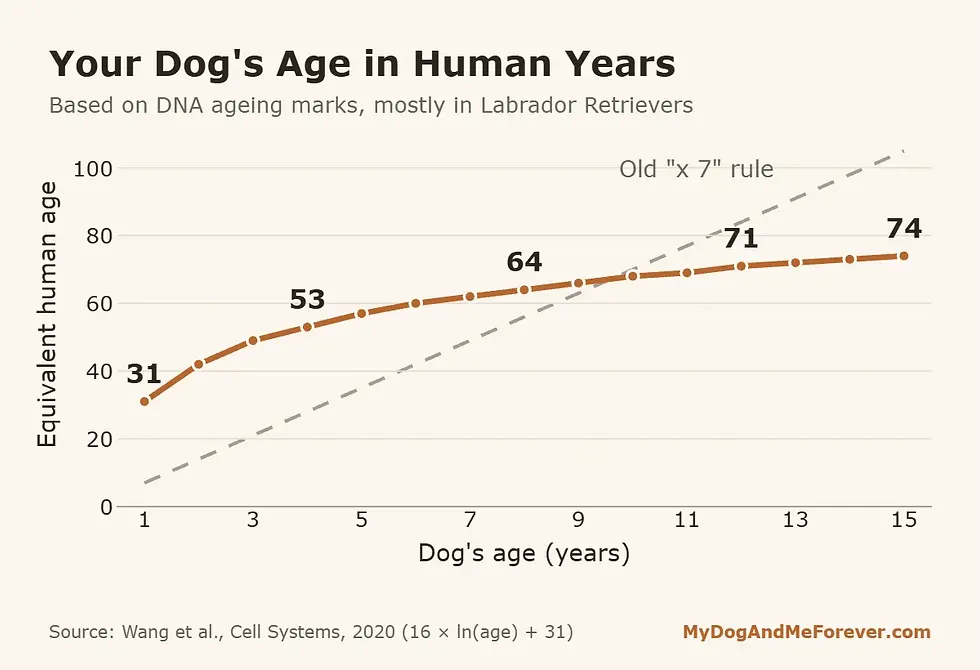
Here is a number that may stop you in your tracks. By a dog's fourth birthday, scientists estimate their body is roughly the age of a person in their early fifties.
Four candles on the cake. Fifty-something on the inside.
That is why senior dog care matters so much, and why it starts sooner than most of us expect. One morning you notice the first frost of white on the muzzle. A hesitation at the bottom of the stairs. A nap that runs a little longer than it used to. Every dog lover knows that moment, and the small ache that comes with it.
But here is the good news. Old age is not a disease. It is a season. With the right knowledge, a few gentle changes at home and a vet who sees your dog regularly, the senior years can be some of the sweetest you will ever share. Here is how.
When Does a Dog Become a Senior?
There is no single birthday when a dog turns "old". A Chihuahua and a Great Dane age on very different clocks.
The American Animal Hospital Association (AAHA), which sets standards for veterinary hospitals across North America, defines a senior dog as one in the last 25% of its estimated lifespan, through to the end of life. Its 2023 Senior Care Guidelines note that senior pets make up 44% of the pet population, and rest on one simple idea: "old age is not a disease."
The American Veterinary Medical Association (AVMA) turns that 25% rule into rough ages by size:
Dog size | Typical weight | Roughly senior from |
Small or toy | Under 20 lb (9 kg) | 8 to 11 years |
Medium | 20 to 50 lb (9 to 23 kg) | 8 to 10 years |
Large | 50 to 90 lb (23 to 41 kg) | 8 to 9 years |
Giant | Over 90 lb (41 kg) | 6 to 7 years |
Real vet records tell a similar story. A 2025 University of Liverpool study in the Journal of Small Animal Practice found UK vets described dogs as "old" at a median age of 12.5 years, from about 11.7 in Cocker Spaniels to about 14.1 in Jack Russell Terriers.
Forget "Times Seven": How Old Is Your Dog in Human Years?
Most of us grew up with a simple rule: one dog year equals seven human years. It is easy. It is also wrong.
In 2020, a University of California San Diego team led by Tina Wang and Trey Ideker published a study in the journal Cell Systems. They read chemical marks that build up on DNA over a lifetime, a kind of molecular clock, in 104 dogs, mostly Labrador Retrievers, and matched them to the same marks in people.
The result was a new formula: human age ≈ 16 × the natural logarithm of the dog's age + 31.
Don't worry about the maths. Here is what it means. Dogs race through their early years, then slow down. A one-year-old dog is roughly like a 30-year-old person, not a seven-year-old. A four-year-old is in their early fifties. Then the curve flattens, so a 12-year-old Labrador lines up with about 70 human years, matching average human life expectancy worldwide.
🐾 Worth Knowing The researchers cautioned that breeds with very different lifespans may age on different curves, so treat this as a guide. The real lesson: your dog's middle age arrives early, so the best time to start senior dog care is before you think you need it. |
How Long Do Dogs Live? Lessons From 584,734 Dogs
In 2024, the charity Dogs Trust led one of the largest dog lifespan studies ever done. Published in Scientific Reports by Kirsten McMillan and colleagues, it pooled records of 584,734 UK dogs across 155 breeds.
The median life expectancy was 12.5 years. Females lived slightly longer than males (12.7 versus 12.4 years). Among purebreds, small dogs (12.7 years) outlived large dogs (11.9 years), and flat-faced breeds had a median of just 11.2 years, against 12.8 years for dogs with medium-length noses.
The gap between breeds is striking:

A median is a middle point, not a deadline. Plenty of dogs sail past it. A few go much further.
Bluey: The Dog Who Lived 29 Years
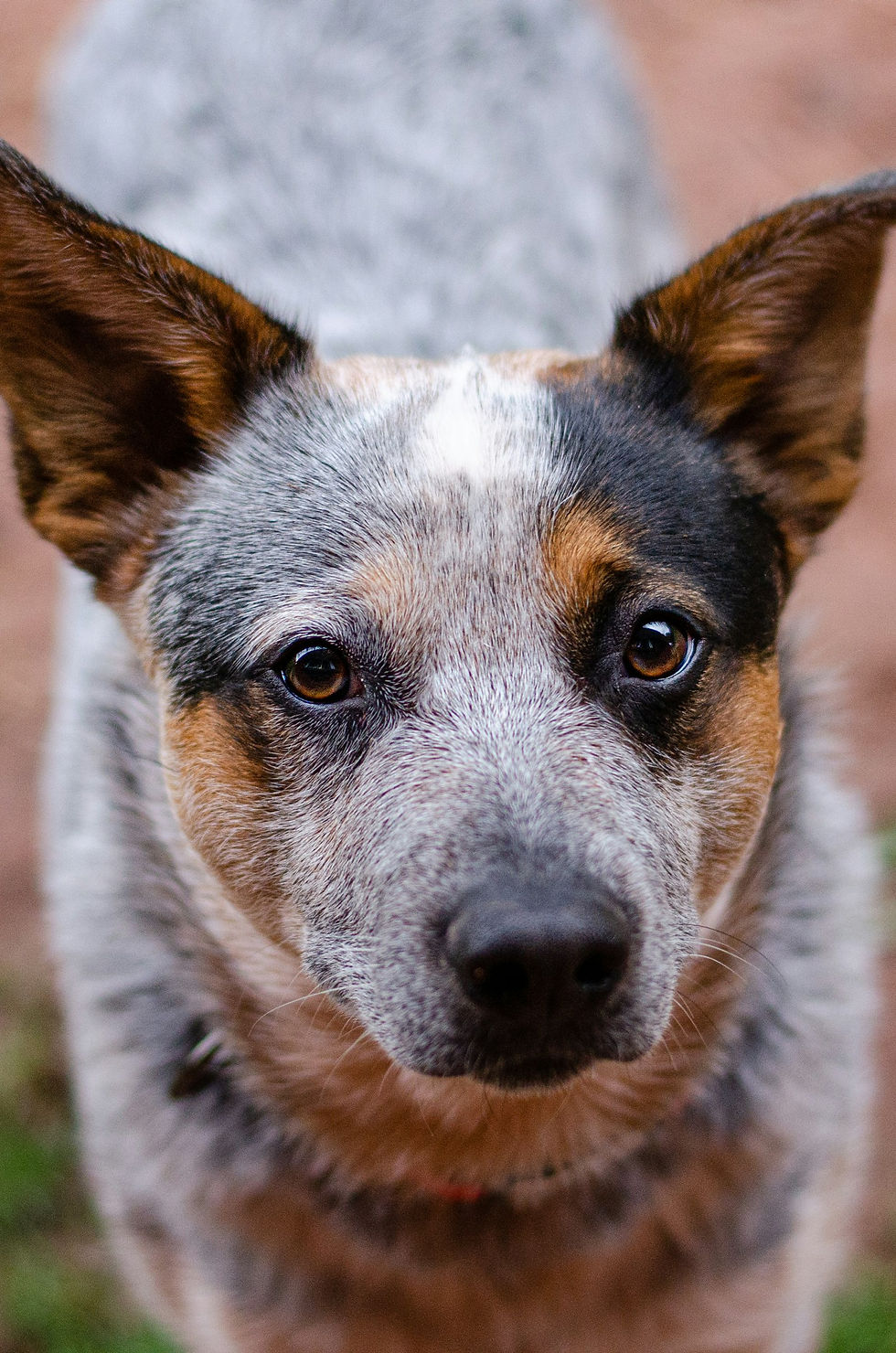
In 1910, in the small town of Rochester, Victoria, in Australia, William Hall took in an Australian cattle dog puppy called Bluey. When William died, his son Les, the town grocer, inherited the dog.
Bluey worked cattle and sheep for nearly 20 years, then lived on with the family long after retiring. Bluey died in November 1939, aged 29 years and five months. Guinness World Records lists Bluey as the oldest dog ever verified.
A Portuguese dog named Bobi briefly took the title in 2023, but after vets raised doubts, Guinness ruled in February 2024 that it no longer had evidence to support his claim, and Bluey's record was restored.
Rochester has never forgotten. In 2019 the town put up a mural in Bluey's honour, and Les Hall's daughter, Edna Staley, said she was proud to see it at the pool she passes daily.
The Quiet Signs of Ageing Most Owners Miss
Dogs are masters of carrying on. They rarely cry out; they quietly change how they live. That is why the most powerful tool in senior dog care is your own attention.
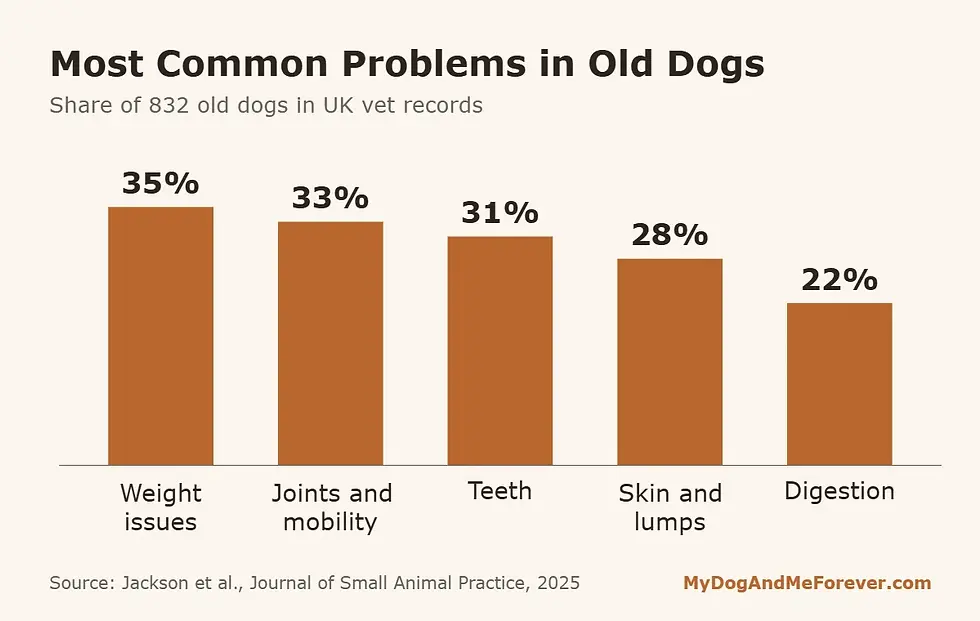
The Liverpool study above also listed the problems vets most often recorded in old dogs:
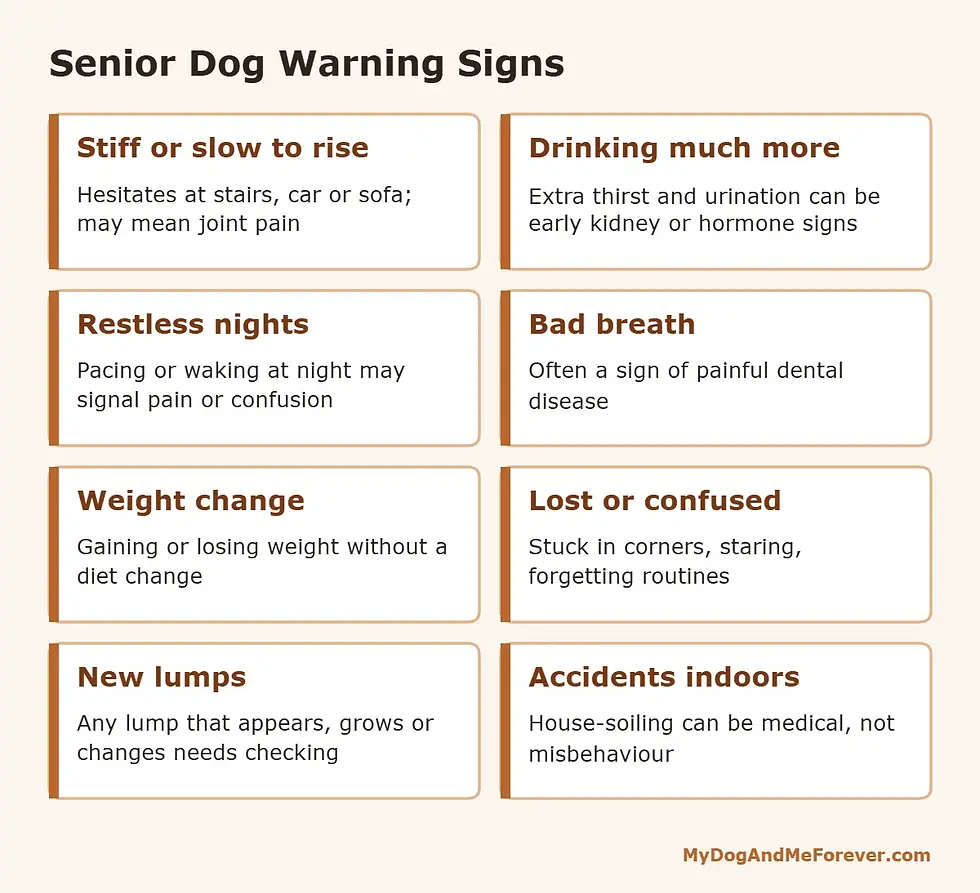
Watch for these gentle warning signs, and mention any of them to your vet:
Stiff Joints, Hidden Pain: Arthritis in Older Dogs
Osteoarthritis is one of the great hidden thieves of comfort in older dogs.
A 2018 study in Scientific Reports, using the Royal Veterinary College's VetCompass records of 455,557 UK dogs, found 2.5% had osteoarthritis recorded in a single year, or about 200,000 UK dogs. Being over eight and heavier were key risk factors, and the average age at first diagnosis was 10.5 years.
That may be the tip of the iceberg. In 2024, North Carolina State University researchers X-rayed 123 young dogs aged eight months to four years and found osteoarthritis in at least one joint in about 40% of them. Only two of the dogs with clinical signs were receiving pain treatment. If arthritis can start that young, imagine how many older dogs are quietly hurting.
The American College of Veterinary Surgeons lists signs to watch for:
A stiff gait, or a swaying or "bunny hopping" walk
Reluctance to jump onto furniture or into the car
Limping, or sitting with one leg stuck out
Difficulty getting up from lying down
Less activity overall
The good news is that a lot can be done. The same surgeons call weight control by far the most critical part of managing arthritis, because fat both loads the joints and fuels inflammation. Gentle, low-impact exercise like lead walks builds the muscles that support sore joints, and your vet can offer safe, dog-specific pain relief and therapies such as hydrotherapy.
🐾 A Gentle Reminder Never give your dog human painkillers. America's National Capital Poison Center warns that as little as half a tablet of a human anti-inflammatory can seriously harm a dog. Drugs like ibuprofen and naproxen can cause vomiting, stomach bleeding and kidney injury, and paracetamol (acetaminophen) can damage the liver. If your dog seems sore, call your vet. They have medicines made for dogs. |
When the Mind Wanders: Canine Cognitive Dysfunction
Some of the hardest changes are not in the legs. They are in the mind.
Canine cognitive dysfunction, often called "doggy dementia", is a real, recognised condition. The AAHA guidelines estimate that about 14% to 22.5% of dogs older than eight are affected by age-related cognitive impairment.
The risk climbs steeply with age. A 2001 study in the Journal of the American Veterinary Medical Association found signs of impairment in 28% of dogs aged 11 to 12, and in 68% of dogs aged 15 to 16. A 2022 Dog Aging Project study of 15,019 dogs in Scientific Reports found each extra year of age raised the odds of dementia by 52%.
Yet it is badly underdiagnosed. A 2010 Australian study in The Veterinary Journal estimated that 14.2% of older dogs had the condition, but only 1.9% had been diagnosed by a vet. Many owners simply assume confusion is "just old age."
Vets use the word DISHAA to remember the signs:
Disorientation: getting lost in familiar places, stuck behind furniture, staring at walls
Interaction changes: less interest in family, or new clinginess or grumpiness
Sleep-wake changes: sleeping all day, pacing or barking at night
House soiling: forgetting long-held toilet habits
Activity changes: aimless wandering, or less play and exploring
Anxiety: new fears, distress when alone, restlessness
There is hope here. The same Dog Aging Project study found that dogs whose owners said they were not active had 6.47 times the odds of dementia of very active dogs. The link may run both ways, but it is one more reason to keep old dogs moving, sniffing and learning.
🐾 Try This Today Turn one walk a week into a "sniffari". Let your dog choose the route and sniff for as long as they like. In a 2019 study in Applied Animal Behaviour Science, just two weeks of regular scent work made dogs measurably more optimistic. For an old dog, a good sniff is exercise for the brain. |
Food, Weight, Teeth, Eyes and Kidneys
The lean dog advantage
If one gift can add years to a dog's life, it may be a lighter food bowl.
In a landmark 14-year Nestlé Purina study, published in the Journal of the American Veterinary Medical Association in 2002, researchers led by Richard Kealy followed 48 Labrador Retrievers from seven litters. Littermates were paired, and one dog in each pair was fed 25% less than the other, from eight weeks of age for life.
Result | Fed 25% less (lean) | Fed more |
Median lifespan | 13.0 years | 11.2 years |
Hip arthritis on X-ray at age 2 | 1 of 24 dogs | 6 of 24 dogs |
First needed arthritis treatment | Mean age 13.3 years | About three years earlier |
Visible ageing (grey muzzle, stiff gait) | Appeared later | Appeared earlier |
That is 1.8 extra years for the lean dogs, with arthritis and other chronic diseases arriving later. And extra weight is now the norm. In a 2022 survey by the Association for Pet Obesity Prevention, vets classed 59% of US dogs as overweight or obese. A 2019 study of 50,787 dogs across 12 popular breeds, in the Journal of Veterinary Internal Medicine, found overweight dogs lived up to two and a half years less than dogs at a healthy weight.
Ask your vet to show you how to body-condition score your dog. You should be able to feel the ribs easily and see a waist from above.
What belongs in an older dog's bowl
Food is one of the simplest, most loving tools in senior dog care. But the label on the bag can mislead you.
Few owners know there is no official definition of "senior" dog food. As a 2025 study in Frontiers in Veterinary Science points out, neither the Association of American Feed Control Officials (AAFCO) nor the US National Research Council has set nutrient standards for a senior life stage.
The result is a lucky dip. When Tufts University researchers analysed nearly 40 senior dog foods in 2011, calories ranged from 246 to 408 per cup, and protein, fat and sodium varied just as widely. As Tufts nutritionist Dr Lisa Freeman put it, "every 'senior diet' is different."
Protein deserves a special mention. An old myth says older dogs need less protein to spare their kidneys. The AAHA guidelines say otherwise: healthy seniors tend to lose muscle and gain fat, so their diet may need a little more good-quality protein, not less. Restricting protein is a step for dogs with diagnosed kidney disease, taken with your vet.
A few practical habits help almost every older dog:
Smaller, more frequent meals. Dogs Trust suggests two or three smaller meals a day to support a healthy weight.
Count the treats. Snacks and scraps add up fast, and PDSA warns that extra weight worsens joint pain.
Add moisture. The AAHA guidelines note that adding moisture to food improved digestibility in senior dogs. Keep fresh water within easy reach.
Make it tempting. If appetite dips, gently warming food may help, according to Today's Veterinary Practice.
One warning: an old dog who goes off their food is not just being fussy. The AAHA guidelines list poor appetite as a common sign of chronic disease, so it deserves a prompt vet visit.
🐾 Questions to Ask Your Vet About Food • What are my dog's body condition and muscle condition scores? • How much should my dog eat each day, treats included? • Do my dog's blood test results mean we should change the diet? |
Teeth: the pain you cannot see
Dental disease was the most common diagnosis in a 2021 VetCompass study of 22,333 UK dogs, affecting 12.5% in one year. Dogs aged eight and over were more than three times as likely to be affected as dogs aged two to four, and small dogs were especially prone. As Bill Lambert of The Kennel Club put it, "dogs will not complain when they suffer from tooth problems." Bad breath, dropping food or chewing on one side all deserve a vet check.
Eyes and ears
Many dogs over seven develop a soft bluish haze in the eyes called nuclear sclerosis. A veterinary eye specialist quoted by the American Kennel Club explains that it usually affects sight very little, unlike cataracts, which can cause blindness. Your vet can tell the two apart.
If sight or hearing fades, the AVMA suggests keeping furniture where it is so your dog can navigate by memory, and teaching hand signals for "come" and "stop".
Kidneys
The Merck Veterinary Manual notes that kidney disease becomes more common from about age five or six, affecting up to 10% of elderly dogs. The earliest signs, more drinking and more urination, often appear only once damage is underway, which is why routine blood and urine tests matter so much.
Senior Dog Care at Home: Small Changes, Big Comfort
Caring for an older dog at home is mostly about removing small struggles. Picture this: your dog crosses a shiny kitchen floor, legs splaying like a newborn foal's. Now picture the same walk on a non-slip runner, steady and sure.
The AAHA guidelines and the AVMA suggest:
Grip underfoot. Rugs or yoga mats over slippery floors, and toe grips or dog boots if needed.
Ramps and steps. For the car, sofa or bed, so joints are spared the jump.
Raised food and water bowls. Easier on stiff necks and backs.
A supportive bed. An orthopaedic bed away from stairs.
A support harness. A padded harness helps you lift a larger dog safely.
Safety first. Gate off stairs and pools, especially for dogs with poor sight or hearing.
A few more kindnesses help too: a soft night light for a dog who gets muddled in the dark, shorter and more frequent walks, food puzzles and simple new tricks, gentle grooming to check for lumps, and a calm, predictable routine.

Keeping body and mind busy
The vet charity PDSA puts it perfectly: "Don't stop walking when your dog ages – just do it differently." Their advice is little and often, because joints stiffen when they have not been used for a while. Let your dog set the pace, plan short routes with plenty of rest stops, and never push them to keep going.
A gentle week for an older dog might look something like this. Treat it as a starting point and adapt it with your vet:
When | For the body | For the mind |
Every day | Two or three short walks at your dog's pace | A few minutes of an old trick or a simple new one |
Two or three days | One slow "sniffari" on a familiar route | A sniff hunt for food scattered in grass or a rolled towel |
Two or three days | Gentle play, or swimming or hydrotherapy if your vet agrees | A puzzle feeder for part of a meal |
One day | A quiet rest day with short garden strolls | Calm grooming and cuddles |
Watch the weather, too. PDSA notes that older dogs cope less well with heat and cold, so walk at cooler times in summer, consider a coat in winter, and play indoor games on extreme days.
How do you know you have overdone it? Your dog will tell you. If they stop and lie down on a walk, or seem stiff after a strenuous outing, it was too much. Go shorter and slower next time, and mention it to your vet.
Peaceful nights and fading senses
Older dogs tend to sleep more, Dogs Trust notes, and that is normal. Sleeping all day and pacing all night is not. The AAHA guidelines list that pattern as a sign of cognitive dysfunction, and pain can disturb sleep too, so raise broken nights with your vet early.
At home, the same guidelines suggest night lights, soothing background sound and a comfortable room temperature. PDSA adds that a bed raised off the floor and out of draughts eases aching joints. A last gentle toilet trip and the same bedtime routine every night give a muddled mind something familiar to hold on to.
Fading senses call for small adjustments too. The Merck Veterinary Manual explains that age-related changes in the inner ear are the most common cause of acquired deafness, so an older dog who stops coming when called may simply not hear you. Deaf dogs are also more easily startled. So:
Approach where your dog can see you, and wake them gently with a soft touch rather than a sudden one.
Teach hand signals for everyday cues while your dog can still learn them easily.
For a dog losing sight, keep furniture and bowls in the same places, speak softly as you approach, and try a textured mat to mark steps and doorways.
Dogs Trust notes that most dogs adjust well to failing sight, because the change usually comes gradually. Your patience does the rest.
Grooming as a bonding ritual
A few minutes of gentle brushing does far more than tidy a coat. Dogs Trust recommends daily grooming for older dogs. Picture a quiet few minutes each evening, just the two of you, while your hands travel over your dog, feeling for new lumps, sore spots or skin changes.
Check nails often, too. Shorter walks mean nails wear down less, so ask your vet or groomer to show you how to trim them safely.
If you find a lump, don't just watch it. The "See Something, Do Something" guideline from veterinary oncologist Dr Sue Ettinger, published in Today's Veterinary Practice, is simple: any lump the size of a pea (about 1 cm) that has been there for a month should be sampled with a needle or biopsied. The AAHA guidelines also suggest keeping photos or a simple body "map" of lumps, so changes are easy to spot.
Handling accidents with dignity
Accidents in the house are not bad behaviour, and an old dog should never be scolded for them. They can stem from kidney disease, diabetes, urinary infections or dementia. In spayed females, a weak bladder sphincter is the most common cause of leaking, and vets report that medication often works very well. So see your vet first. Meanwhile, washable bedding, absorbent pads and a calm clean-up protect both your floors and your dog's dignity.
The Twice-a-Year Vet Visit
The AVMA says senior pets should see a vet twice a year or more. Why so often? Because, as the dog-years chart shows, six months is a long time in a senior dog's life. Changes that take years in us can unfold in months in them.
The AAHA guidelines recommend these core checks for senior dogs:
Check | How often (AAHA) | What it can reveal |
Full exam and mouth check | Every visit | Pain, lumps, dental disease, weight change |
Blood count and chemistry panel | Every 6 to 12 months | Anaemia, infection, kidney and liver function |
Urine test | Every 6 to 12 months | Kidney disease, infection, diabetes |
Blood pressure | Once a year | High blood pressure |
Thyroid test (T4) | Once a year | Thyroid problems |

🐾 Before Your Next Vet Visit Keep a simple symptom diary on your phone or the fridge. Note the date and anything new: • How much your dog drinks and eats • Any limping, stiffness or trouble on stairs • Night waking, pacing or confusion • Coughing, vomiting, accidents or lumps • Short videos of odd behaviour, which help your vet enormously |
What Science Is Learning From Old Dogs
The Dog Aging Project, supported by the US National Institute on Aging and private donors, launched in late 2019 hoping to enrol 10,000 dogs. It now has more than 50,000 companion dogs from all 50 states, all living at home.
Its boldest experiment is TRIAD, the Test of Rapamycin In Aging Dogs: a double-blind, placebo-controlled trial asking whether rapamycin, a drug long used in transplant medicine, can extend dogs' lives. It enrols healthy dogs aged seven or older weighing at least 44 lb (20 kg), followed for about three years. In late 2024, a $7 million NIH grant allowed the trial to grow toward 580 dogs.
The project is already teaching lessons that need no prescription. A 2023 study of 21,410 dogs in Evolution, Medicine & Public Health found that social support, meaning companionship with people and other dogs, was linked to better health, with an effect five times stronger than that of financial factors. In other words, your company is medicine.
One remarkable sanctuary in Tennessee understood that long ago. In 2012, Zina and Michael Goodin, both mechanical engineers, turned their home into Old Friends Senior Dog Sanctuary in Mount Juliet. It takes in dogs aged eight and up, many of them from shelters where they faced euthanasia, and has welcomed more than 1,400 senior dogs. Around 120 live at its nine-acre home, The PAWvillions, while more than 400 others live with "Geezer Guardian" families and the sanctuary covers their medical care.
And it is never too late to be loved. Jennifer and Steve Hetterscheidt of Oakland, Tennessee, adopted a golden retriever named Augie when she was already 14 and had been rehomed twice. Golden retrievers typically live 10 to 12 years. Augie turned 20 in April 2020, still loving blueberries and trips in the family RV. The deep connection we explore in the bond between humans and dogs does not fade with age. If anything, it grows.

Quality of Life and Planning Ahead, With Love
No honest guide to caring for an older dog can skip this part. One day, the question will shift from "how do we add years?" to "how do we make each day good?"
Many vets use a simple framework created by veterinarian Dr Alice Villalobos, the HHHHHMM scale. It asks about seven things: Hurt, Hunger, Hydration, Hygiene, Happiness, Mobility, and More good days than bad.
When bad days begin to outnumber good ones, it is time for a frank, loving talk with your vet about comfort care. Thinking about this early is not giving up. It is a final act of devotion: making sure your dog's last chapter is peaceful, pain-free and surrounded by the people they love most.
When that time comes, you do not have to face it alone. Our guide to coping with the loss of a dog is here whenever you need it.
Frequently Asked Questions About Senior Dog Care
At what age is a dog considered a senior?
Vets define a senior dog as one in the last 25% of its expected lifespan. For most dogs that is around 8 or older, but giant breeds can be seniors at 6 or 7. Your vet can tell you when your dog crosses that line.
How often should a senior dog see the vet?
The American Veterinary Medical Association recommends twice a year or more. AAHA guidelines suggest blood and urine tests every 6 to 12 months, plus yearly blood pressure and thyroid checks.
What are the signs of dementia in older dogs?
Watch for disorientation, changed interactions, disturbed sleep, accidents indoors, changes in activity and new anxiety, remembered as DISHAA. Pain or hearing loss can look similar, so see your vet.
Can I give my old dog human painkillers for arthritis?
No. Ibuprofen and naproxen can cause stomach bleeding and kidney injury in dogs, sometimes from half a tablet, and paracetamol can damage the liver. Your vet can prescribe safe, dog-specific pain relief.
How much exercise does a senior dog need?
Most older dogs do best with gentle, regular activity: shorter, more frequent walks, plenty of sniffing and low-impact play. Your vet can tailor a plan to your dog's joints, heart and energy.
Should my older dog eat senior food?
Many senior dogs do well on easily digested food matched to their energy needs, and staying lean is vital. Because older dogs often have health conditions, ask your vet which diet suits yours.
A Grey Muzzle Is a Love Letter
In 1870, in a Missouri courtroom, a lawyer named George Graham Vest spoke about a dog's loyalty. His words still ring true for every old dog asleep at someone's feet tonight:
"He will sleep on the cold ground when the wintry winds blow and the snow drives fiercely, if only he can be near his master's side. He will kiss the hand that has no food to offer."
Our dogs give us everything. Their whole lives, from clumsy puppy paws to that frosted, beautiful old face. They never ask whether we are rich or successful. They just want to be near us.
The senior years are our chance to give some of that back. A softer bed. A slower walk. A rug on the slippery floor. A vet visit before something hurts. A long, unhurried sniff of a lamppost, because they have earned it.
Every grey hair on that muzzle is a love letter, a record of every walk, every homecoming and every quiet evening at your side. Read it slowly. Then go and give your old friend a gentle hug.

We would love to hear from you. Leave a comment below with your dog's name and one thing you love about them, grey muzzle and all. And if this guide touched your heart, please share it with a fellow dog lover whose best friend is getting older.
Sources and Further Reading
Jackson et al., "Ageing dogs in primary care", J Small Anim Pract, 2025
McMillan et al., "Longevity of companion dog breeds", Scientific Reports, 2024
Anderson et al., "Appendicular osteoarthritis in UK dogs", Scientific Reports, 2018
Enomoto et al., "Osteoarthritis in young dogs", Scientific Reports, 2024
Today's Veterinary Practice, "Cognitive Dysfunction Syndrome" (Neilson 2001; Salvin 2010)
Yarborough et al., "Cognitive function in the Dog Aging Project", Scientific Reports, 2022
Kealy et al., "Diet restriction and life span in dogs", JAVMA, 2002
University of Liverpool, "Overweight dogs may live shorter lives", 2019
Today's Veterinary Practice, "Phenylpropanolamine for incontinence"
Villalobos, "Quality of Life Scale", Veterinary Practice News
Tufts Now, "Wide Variety in Nutritional Content Found in Senior Dog Foods", 2011
Countryfile, "How to keep an old dog mobile, happy and healthy, from the experts at PDSA"

Comments